
Which river is near to Banawali site? This question is often asked by students, historians, and people interested in the ancient Indus Valley Civilization. Banawali is one of the most important archaeological sites in India that provides valuable information about the Harappan culture. The site is located in the present-day state of Haryana and was once a flourishing urban settlement during the Indus Valley Civilization. Understanding the river near Banawali site helps historians learn about the geographical conditions that supported the growth of this ancient settlement.
Banawali was built close to an ancient river system that played a significant role in the lives of its inhabitants. Like many other settlements of the Indus Valley Civilization, the location of Banawali was carefully chosen near a river that provided water, fertile land, and transportation routes.
Which River Is Near to Banawali Site?
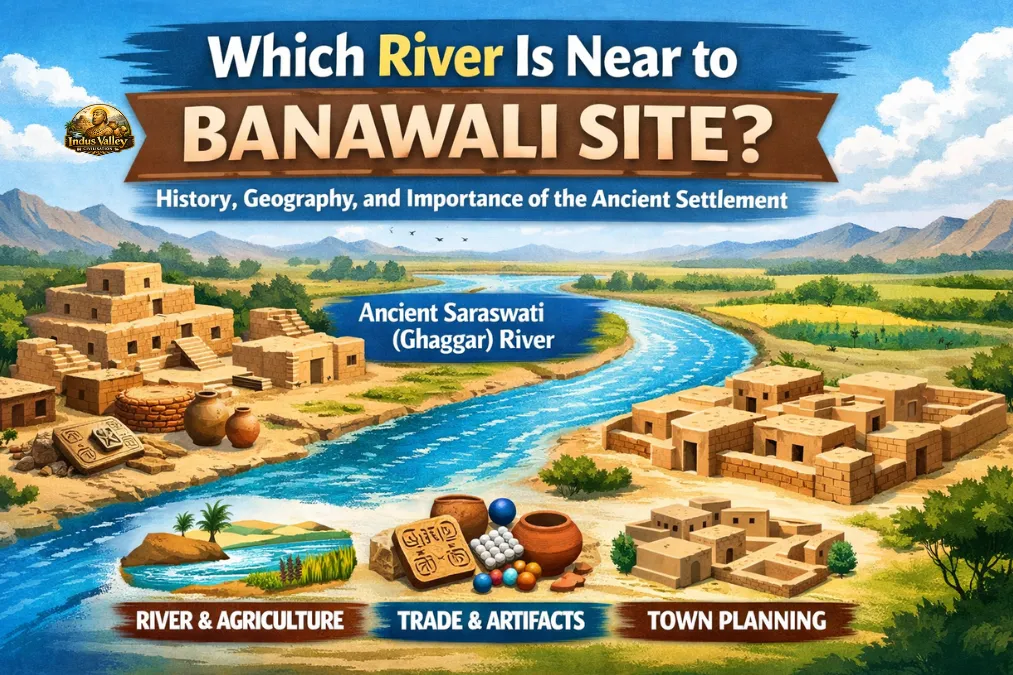
The river near Banawali site is believed to be the ancient Saraswati River, which is often identified with the Ghaggar River system in modern geography. Banawali is located on the banks of the dry bed of the Ghaggar River in Fatehabad district of Haryana, India.
Many historians and archaeologists believe that the Ghaggar River represents the remains of the ancient Saraswati River mentioned in early Indian texts. During the time of the Indus Valley Civilization, this river likely carried much more water than it does today. Because of this flowing river, the region around Banawali was fertile and suitable for agriculture and settlement.
The presence of this river allowed the people of Banawali to build a well-planned town with agricultural fields, houses, streets, and trading connections. Rivers were extremely important for ancient civilizations, and Banawali was no exception.
Location of Banawali Site
Banawali is located in the Fatehabad district of Haryana, about 120 kilometers from Hisar. The site lies close to the dry bed of the Ghaggar River, which flows through parts of Haryana, Rajasthan, and Pakistan.
The strategic location of Banawali made it an ideal place for settlement. The river provided water for farming, drinking, and daily activities. It also helped in transportation and trade with other cities of the Indus Valley Civilization.
Archaeologists believe that when the Saraswati or Ghaggar River was flowing strongly thousands of years ago, the surrounding land was green and fertile. This environment supported agriculture and allowed the settlement to grow into a prosperous town.
Historical Background of Banawali
Banawali is considered one of the important sites of the Indus Valley Civilization, also known as the Harappan Civilization. This civilization existed around 2600 BCE to 1900 BCE and was one of the world’s earliest urban cultures.
The Banawali site was discovered and excavated by the Archaeological Survey of India in the 1970s. Excavations revealed that the settlement had two phases of occupation. The earlier phase belonged to the pre-Harappan period, while the later phase belonged to the mature Harappan culture.
This discovery helped historians understand how early settlements gradually developed into advanced urban centers. Banawali shows clear evidence of town planning, fortifications, and well-organized streets.
The location of the settlement near a river played a key role in its development and success.
Importance of the River Near Banawali Site
The river near Banawali site played several important roles in the daily life of its people. Ancient civilizations were almost always built near rivers because rivers provided essential resources needed for survival.
Water Supply
The most obvious benefit of a nearby river was the availability of water. People needed water for drinking, cooking, cleaning, and farming. A constant water supply made it possible for large communities to survive and grow.
Agriculture and Fertile Soil
Rivers often bring fertile soil during seasonal floods. This fertile soil made the land around Banawali suitable for agriculture. Crops such as wheat, barley, and other grains could be cultivated easily in this region.
The success of agriculture allowed the population to grow and supported economic development.
Transportation and Trade
Rivers also served as transportation routes in ancient times. Boats and small watercraft could move goods from one settlement to another. This helped Banawali connect with other cities of the Indus Valley Civilization.
Trade networks were an important part of Harappan culture, and rivers made long-distance trade easier.
Environmental Stability
A river system helps maintain ecological balance. The presence of water supports vegetation, wildlife, and agriculture. This stable environment allowed Banawali to thrive for many centuries.
Archaeological Discoveries at Banawali
Excavations at Banawali have revealed many fascinating objects and structures that show how advanced the settlement was.
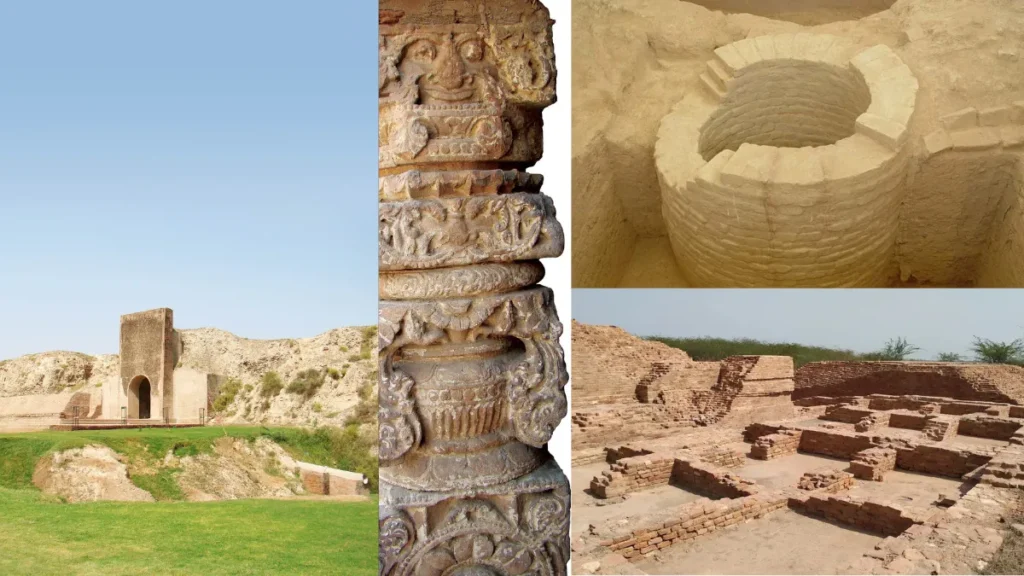
Archaeologists discovered well-planned houses, wide streets, and defensive walls. The town appears to have been carefully designed, which is a common feature of Harappan cities.
Several important artifacts have also been found at the site.
Pottery
Many pieces of painted pottery have been discovered at Banawali. These pottery items were used for storing food, water, and other household items. The pottery designs show artistic skills and cultural traditions of the Harappan people.
Seals and Beads
Harappan seals and beads were also found during excavations. These items were often used for trade and identification. The presence of such artifacts indicates that Banawali was involved in commercial activities with other cities.
Tools and Ornaments
Tools made of copper and stone were discovered at the site. Archaeologists also found ornaments made from semi-precious stones, which shows that the inhabitants valued decoration and craftsmanship.
These discoveries provide a deeper understanding of daily life in Banawali.
Town Planning and Urban Design
Banawali demonstrates advanced urban planning similar to other Indus Valley cities like Harappa and Mohenjo-daro.
The settlement was divided into two main sections. One part served as a fortified area, possibly used for administrative or defensive purposes. The other part was the residential area where people lived.
The streets were laid out in a systematic pattern, which allowed smooth movement throughout the town. Houses were built using baked bricks and often had multiple rooms.
Drainage systems were also present, showing that the residents understood sanitation and urban management.
The presence of a nearby river likely influenced the planning of the town, as water resources needed to be managed carefully.
Agriculture Around Banawali
Agriculture formed the backbone of the Banawali economy. The river near Banawali site played a major role in supporting farming activities.
Farmers grew crops such as wheat, barley, lentils, and possibly cotton. Irrigation was likely supported by the nearby river and seasonal rainfall.
Farming not only provided food for the local population but also supported trade with other regions. Surplus crops could be exchanged for goods such as metals, stones, and crafted items.
Agricultural success was one of the main reasons Banawali developed into a prosperous settlement.
Decline of the River and Its Impact
Over time, the river near Banawali site began to dry up or change its course. Many scholars believe that climatic changes and geological shifts caused the Saraswati or Ghaggar River system to lose its water flow.
As the river dried, the environment around Banawali became less fertile. Agriculture became difficult, and water resources became limited.
These changes likely forced people to leave the settlement and move to other regions with better water availability.
The drying of river systems is considered one of the important reasons for the decline of many Indus Valley Civilization settlements.
Banawali in the Context of the Indus Valley Civilization
Banawali holds an important place among the many sites of the Indus Valley Civilization. It helps historians understand how settlements developed along river systems.
Many major Harappan cities were located near rivers, including the Indus River and its tributaries. Similarly, several settlements were established along the Saraswati or Ghaggar River system.
Banawali provides evidence that this river network supported large communities and played a vital role in the expansion of Harappan culture.
Studying Banawali helps archaeologists learn about trade networks, agriculture, town planning, and daily life during ancient times.
Also read: Banawali: Complete History, Discovery, Civilization, and Archaeological Importance
Modern Significance of Banawali Site
Today, Banawali is an important archaeological site that attracts researchers, students, and history enthusiasts. The discoveries made at this site continue to provide new insights into the Indus Valley Civilization.
The site is protected by the Archaeological Survey of India, which works to preserve and study the remains of the ancient settlement.
Educational institutions often include Banawali in their history and archaeology studies because it represents an important example of early urban life in the Indian subcontinent.
Understanding which river is near to Banawali site also helps scholars study ancient climate patterns and river systems that shaped early human civilizations.
Also read: Banawali in Which State: Complete History, Location, and Archaeological Importance
Conclusion
Which river is near to Banawali site? The settlement of Banawali was located near the ancient Saraswati River, which is commonly associated with the present-day Ghaggar River system. This river played a crucial role in the growth and development of the settlement.
The river provided water, fertile soil, transportation routes, and environmental stability that allowed the Banawali settlement to flourish during the Indus Valley Civilization.
Archaeological discoveries at the site reveal advanced town planning, agriculture, trade, and cultural activities. However, the eventual drying or shifting of the river likely contributed to the decline of the settlement.
Banawali remains one of the most important archaeological sites in India, offering valuable insights into the relationship between ancient civilizations and river systems. Understanding which river is near to Banawali site helps historians reconstruct the geography and lifestyle of one of the world’s earliest urban societies.