
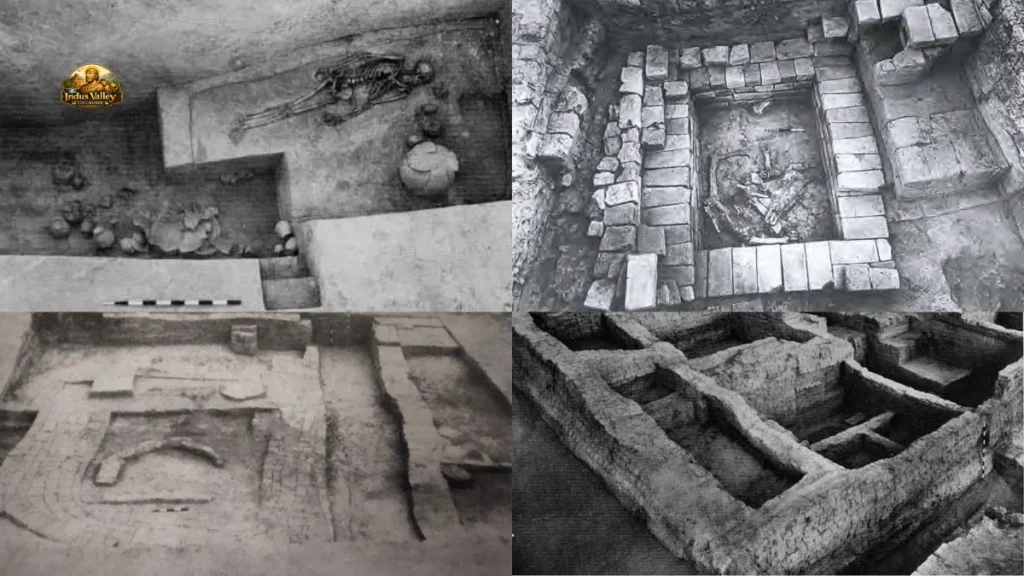
Where is Kalibangan located is a common question asked by students, history lovers, and travelers who are curious about one of India’s most important ancient archaeological sites. Kalibangan is located in the northwestern part of India and holds a special place in the study of the Indus Valley Civilization due to its unique discoveries and well-planned ancient settlement.
Kalibangan is not just a name from textbooks. It is a real place that offers deep insight into early human civilization, town planning, agriculture, and cultural life thousands of years ago. Understanding its location helps us better understand why this site became so important in ancient times.
Where Is Kalibangan Located in India
To clearly understand where is Kalibangan located, it is important to look at the map of India. Kalibangan is located in the Hanumangarh district of the state of Rajasthan. It lies in the northwestern region of the state, close to the India–Pakistan border.
The site is situated on the southern banks of the ancient Ghaggar river, which is believed by many historians to be the dried-up remains of the Saraswati River mentioned in ancient Indian texts. This river played a major role in supporting early settlements in this region.
Kalibangan is approximately 205 kilometers from Bikaner and around 400 kilometers from Jaipur, the capital of Rajasthan. Its location places it within the semi-arid zone of the Thar Desert, yet in ancient times, the presence of the river made the land fertile and suitable for farming.
Exact Geographical Location of Kalibangan
When asking where is Kalibangan located in geographical terms, the answer becomes even more interesting. Kalibangan lies at approximately 29.47 degrees north latitude and 74.13 degrees east longitude. This position places it in the northwestern plains of the Indian subcontinent.
The region experiences extreme climatic conditions today, with very hot summers and cold winters. Rainfall is low and irregular. However, during the time of the Indus Valley Civilization, the climate was relatively wetter, and the river system supported agriculture and daily life.
The site itself spreads across a large area and shows clear evidence of planned urban settlement. The land is mostly flat, which helped ancient builders create straight roads, drainage systems, and residential zones.
Where Is Kalibangan Located in Relation to the Indus Valley Civilization
To understand where is Kalibangan located historically, it is important to see its position within the broader Indus Valley Civilization. Kalibangan was one of the major centers of this civilization, along with sites like Harappa and Mohenjo-daro.
Kalibangan is considered the easternmost significant site of the Indus Valley Civilization. This makes it extremely important because it shows how far the civilization spread and how its culture adapted to different geographical conditions.
Unlike many other Indus Valley sites that are located in present-day Pakistan, Kalibangan lies entirely within India. This has helped Indian archaeologists study the civilization in greater detail without cross-border limitations.
Importance of Kalibangan’s Location Near the Ghaggar River
The location of Kalibangan near the Ghaggar river is one of the key reasons the settlement developed and flourished. Rivers were the lifeline of ancient civilizations, and Kalibangan was no exception.
The Ghaggar river provided water for drinking, farming, and daily activities. The fertile soil near the riverbanks allowed people to grow crops such as wheat and barley. Archaeological evidence also suggests that Kalibangan shows one of the earliest examples of ploughed agricultural fields in the world.
The river also acted as a natural route for trade and communication. Goods could be exchanged with nearby settlements, helping Kalibangan become an active part of a larger economic network.
Where Is Kalibangan Located Compared to Modern Cities
For modern travelers and learners, understanding where is Kalibangan located becomes easier when compared to present-day cities. Kalibangan is about 25 kilometers from Hanumangarh town, which is the nearest major urban center.
Hanumangarh is well-connected by road and rail, making Kalibangan accessible for visitors. The nearest railway station is in Hanumangarh, and from there, local transport can be used to reach the archaeological site.
Although Kalibangan is located in a remote rural area today, its ancient importance far outweighs its modern surroundings. The quiet landscape contrasts sharply with the busy urban life that once existed there thousands of years ago.
Archaeological Significance of Kalibangan’s Location
The question of where is Kalibangan located is deeply connected to its archaeological value. The site was discovered in the 1950s by Indian archaeologists and later excavated extensively.
Kalibangan is unique because it shows two distinct phases of settlement. The lower levels belong to a pre-Harappan culture, while the upper levels belong to the mature Harappan phase. This clear layering helps historians understand how early cultures evolved over time.
The location also revealed evidence of fire altars, suggesting ritualistic practices. This discovery is rare among Indus Valley sites and indicates that Kalibangan may have been an important religious or ceremonial center.
Why Kalibangan’s Location Matters in Indian History
Understanding where is Kalibangan located helps explain its importance in Indian history. Kalibangan proves that advanced urban planning and cultural development existed in India as early as 3000 BCE.
The site challenges earlier beliefs that major ancient civilizations were limited to river valleys like the Indus alone. Kalibangan shows that even regions that are dry today once supported thriving human settlements.
Its location also strengthens the theory of the Saraswati River civilization, adding a new dimension to the study of ancient India. This has made Kalibangan a key reference point in historical and archaeological research.
Cultural and Educational Importance of Kalibangan Today
Today, Kalibangan’s location makes it an important destination for students, researchers, and tourists. Many school textbooks mention Kalibangan while discussing the Indus Valley Civilization, making it a familiar name for learners across India.
Universities and research institutions continue to study the site to uncover more details about ancient life. The discoveries made at Kalibangan help improve our understanding of town planning, agriculture, and social organization in early civilizations.
The Archaeological Survey of India has preserved the site, allowing visitors to see the remains of streets, houses, and public structures. This helps people connect visually and emotionally with ancient history.
Also read: Kalibangan: Complete History, Discovery, Civilization Features, and Archaeological Importance
Where Is Kalibangan Located and How to Visit It
For those planning a visit, knowing where is Kalibangan located is the first step. Kalibangan is accessible by road from Hanumangarh, Bikaner, and other nearby cities in Rajasthan.
The best time to visit is during the winter months, from October to March, when the weather is pleasant. Summers can be extremely hot, making travel uncomfortable.
While the site does not have large tourist facilities, its historical atmosphere and open landscape offer a peaceful and educational experience for visitors interested in India’s ancient past.
Also read: Kalibangan Discovered By Amalananda Ghosh: Exploring a Lost Harappan Civilization
Conclusion
Where is Kalibangan located is more than just a geographical question. Kalibangan is located in Hanumangarh district of Rajasthan, along the ancient Ghaggar river, and holds a vital place in the story of human civilization.
Its location explains its rise as a major center of the Indus Valley Civilization and highlights the importance of rivers, climate, and geography in shaping human history. Kalibangan stands as a silent witness to advanced urban life that existed thousands of years ago and continues to educate and inspire people today.
By understanding where Kalibangan is located, we gain a deeper appreciation of India’s rich and ancient heritage and the remarkable achievements of early human societies.