
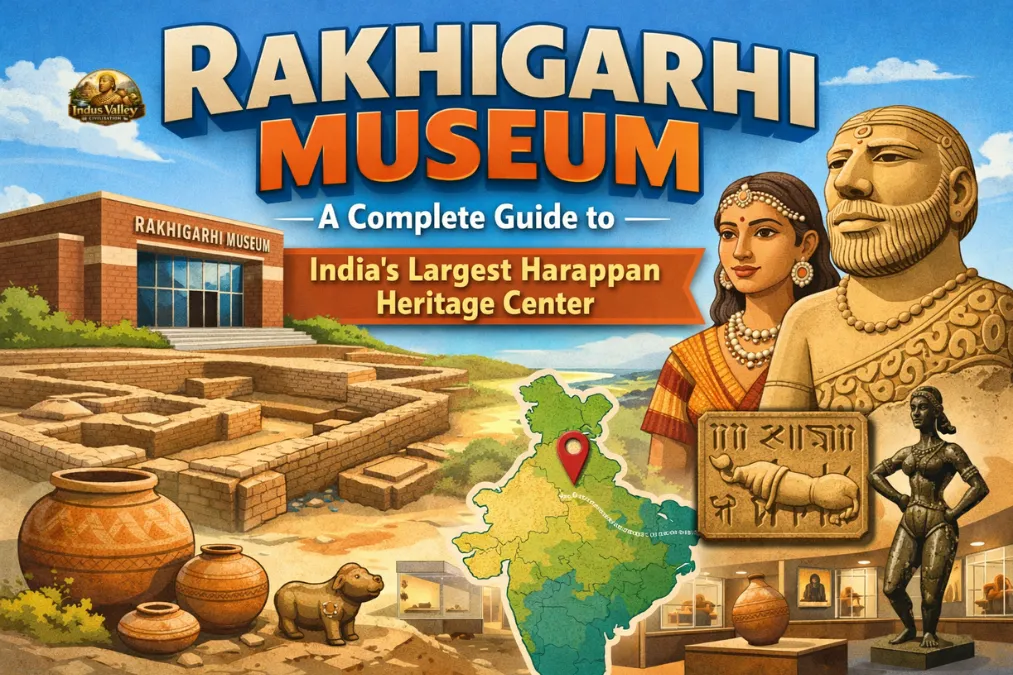
Rakhigarhi museum is one of the most important cultural attractions connected to the ancient Indus Valley Civilization in India. Located near the famous archaeological site of Rakhigarhi in Haryana, this museum helps visitors understand the life, culture, and advanced knowledge of one of the world’s oldest urban civilizations. The museum plays a major role in preserving historical discoveries and presenting them in a simple and educational way for people of all ages.
Rakhigarhi is known as the largest Harappan site ever discovered in the Indian subcontinent, and the museum adds great value by displaying the objects found during excavations. Together, the archaeological site and the museum offer a rare opportunity to explore India’s deep-rooted ancient history.
Introduction to Rakhigarhi Museum
Rakhigarhi museum was developed to protect and showcase the valuable artifacts excavated from the Rakhigarhi archaeological site. This site dates back nearly 4,500 to 5,000 years and belonged to the mature phase of the Harappan or Indus Valley Civilization.
The museum acts as a bridge between modern society and ancient urban life. It allows visitors to see how people lived, traded, built cities, practiced crafts, and followed social systems thousands of years ago. Unlike textbooks, the museum brings history to life through real objects and well-planned exhibits.
Location of Rakhigarhi Museum
Rakhigarhi museum is located in Rakhigarhi village of Hisar district in Haryana, India. The village lies about 150 kilometers northwest of Delhi and around 45 kilometers from Hisar city. The museum stands close to the excavation mounds, making it convenient for visitors to explore both the museum and the archaeological site on the same trip.
The area is well connected by road, and visitors can reach it easily from major cities such as Delhi, Rohtak, Hisar, and Chandigarh.
Historical Importance of Rakhigarhi
Rakhigarhi holds exceptional importance in Indian history because it is the largest known site of the Indus Valley Civilization. Archaeological studies have revealed that the settlement was larger than even Harappa and Mohenjo-daro.
The discoveries from Rakhigarhi have helped historians understand:
- Early urban planning in India
- Advanced drainage and sanitation systems
- Standardized brick construction
- Trade networks with distant regions
- Agricultural practices and food habits
- Social and economic organization
Rakhigarhi museum preserves these discoveries and presents them in a structured and easy-to-understand format.
Purpose and Vision of the Museum
The main purpose of rakhigarhi museum is conservation, education, and awareness. The museum was created with the vision to protect fragile archaeological materials and make them accessible to the public.
Its key objectives include:
- Preserving original Harappan artifacts
- Educating students and researchers
- Promoting heritage tourism
- Creating awareness about ancient Indian civilization
- Supporting ongoing archaeological research
The museum also encourages respect for cultural heritage and helps prevent illegal artifact trade.
Architecture and Design of Rakhigarhi Museum
The architecture of rakhigarhi museum reflects simplicity and functionality. The design blends modern construction with traditional themes inspired by Harappan culture. Earthy colors, open spaces, and natural lighting help maintain a calm and educational atmosphere.
The layout is visitor-friendly, with clear signage and organized galleries. The design allows smooth movement from one section to another, helping visitors follow the historical timeline easily.
Main Galleries Inside Rakhigarhi Museum
Archaeological Artifacts Gallery
This gallery displays original items excavated from the Rakhigarhi site. These artifacts provide direct evidence of daily life during the Harappan period.
Common exhibits include:
- Pottery of different shapes and sizes
- Storage jars and cooking vessels
- Terracotta figurines
- Clay toys and animal figures
- Seals with Harappan symbols
Each object is labeled clearly with details about its use, material, and estimated age.
Harappan Urban Planning Section
One of the most fascinating parts of rakhigarhi museum focuses on city planning. Visitors can learn how Harappans built well-organized cities long before modern engineering.
This section highlights:
- Grid-pattern streets
- Multi-room brick houses
- Advanced drainage systems
- Public buildings and workshops
- Separate residential and industrial areas
Models and diagrams help visitors visualize how the ancient city looked thousands of years ago.
Tools and Technology Gallery
This gallery showcases the technological skills of Harappan people. The tools reflect advanced knowledge of metallurgy and craftsmanship.
Displayed items include:
- Copper and bronze tools
- Stone blades and chisels
- Beads made of semi-precious stones
- Weights and measurement tools
These exhibits show that the Harappans followed standardized systems, which played a major role in trade.
Burial and Human Remains Section
One of the most scientifically important discoveries from Rakhigarhi is the human skeletons found during excavation. The museum presents this sensitive information with care and respect.
This section helps explain:
- Burial practices
- Health conditions of ancient people
- Physical features and lifestyle
- DNA research findings
These discoveries have contributed significantly to understanding the origins and migration patterns of ancient populations in South Asia.
Art, Culture, and Daily Life Gallery
This gallery brings emotional depth to the museum by showing the cultural side of Harappan society.
Visitors can learn about:
- Clothing styles
- Ornaments and jewelry
- Religious symbols
- Music and recreation
- Family life and social roles
Terracotta figurines and decorative items offer a glimpse into artistic expression during that era.
Important Artifacts Displayed in Rakhigarhi Museum
Rakhigarhi museum houses many rare and valuable objects that cannot be found elsewhere. Some of the most notable artifacts include:
- Seals with undeciphered Harappan script
- Bangles made of shell and terracotta
- Fire altars indicating ritual practices
- Storage systems for grains
- Painted pottery with geometric designs
Each artifact helps historians piece together the story of an advanced but mysterious civilization.
Educational Value of the Museum
The museum is highly beneficial for students, researchers, and history enthusiasts. Schools and universities often organize educational tours to help learners understand archaeology beyond classroom learning.
The museum provides:
- Simple explanations for beginners
- Detailed information for researchers
- Visual learning through models and maps
- Guided tours by trained staff
It also supports academic research by preserving original findings safely.
Role in Promoting Heritage Tourism
Rakhigarhi museum has significantly boosted heritage tourism in Haryana. Earlier, the region was mainly known for agriculture, but now it attracts historians, archaeologists, travelers, and cultural explorers.
The museum encourages:
- Local employment opportunities
- Cultural pride among residents
- Development of tourism infrastructure
- National and international recognition
It has become an important destination for those interested in India’s ancient past.
Best Time to Visit Rakhigarhi Museum
The ideal time to visit rakhigarhi museum is between October and March. During these months, the weather remains pleasant and suitable for walking around the excavation site.
Summer months can be extremely hot in Haryana, which may make outdoor exploration uncomfortable. Winters offer the best overall experience.
Visitor Facilities at the Museum
The museum provides basic facilities to ensure a comfortable visit.
These include:
- Ticket counter
- Information boards
- Clean surroundings
- Parking area
- Security arrangements
As tourism grows, more facilities are gradually being added to improve visitor experience.
Connection Between the Museum and Excavation Site
One of the biggest advantages of rakhigarhi museum is its close connection to the actual archaeological site. Visitors can first explore the museum to understand the background and then walk through the excavation mounds.
This combination helps people visualize:
- Where the artifacts were found
- How ancient structures were arranged
- The scale of the ancient city
Few museums in India offer such a direct link between display and discovery.
Research and Ongoing Discoveries
Rakhigarhi continues to be an active archaeological site. New discoveries are still being made, and the museum regularly updates its displays based on recent findings.
Scientific studies, including DNA analysis and carbon dating, have brought global attention to Rakhigarhi. The museum plays a key role in sharing these findings with the public in a simple and understandable manner.
Cultural Significance of Rakhigarhi Museum
Beyond history and science, the museum holds cultural importance. It reminds modern society of India’s long tradition of urban development, trade ethics, environmental planning, and social harmony.
The museum promotes respect for ancient knowledge systems and highlights India’s contribution to world civilization.
Why Rakhigarhi Museum Is Important for India
Rakhigarhi museum is not just a building filled with old objects. It is a symbol of India’s deep historical roots and intellectual heritage.
Its importance lies in:
- Preserving national heritage
- Strengthening historical identity
- Supporting archaeological research
- Educating future generations
- Enhancing global understanding of Indian civilization
It stands as proof that advanced urban life existed in the Indian subcontinent thousands of years ago.
Tips for Visitors
Before visiting rakhigarhi museum, it is helpful to keep a few tips in mind:
- Allocate at least two to three hours for a proper visit
- Read display descriptions carefully
- Combine museum visit with site exploration
- Follow photography rules
- Respect the artifacts and restricted areas
A guided tour can further enhance understanding.
Read also: Rakhigarhi in Which State: Complete Guide to Location, History, and Importance
Future Development Plans
The government and archaeological authorities plan to further develop the museum and surrounding area. Proposed improvements include:
- Digital displays and interactive panels
- Research centers and libraries
- Improved tourist facilities
- Cultural programs and workshops
These developments aim to transform Rakhigarhi into a world-class heritage destination.
Read also: Rakhigarhi Haryana: Complete Guide to India’s Largest Harappan Civilization Site
Conclusion
Rakhigarhi museum stands as a gateway to one of the most remarkable chapters of human history. It preserves the legacy of the Indus Valley Civilization and presents it in a way that is educational, engaging, and meaningful. From urban planning and technology to art and daily life, the museum reveals how advanced ancient Indian society truly was.
For anyone interested in archaeology, history, culture, or heritage tourism, visiting rakhigarhi museum is a deeply enriching experience. It not only connects visitors to the past but also inspires appreciation for the knowledge and achievements of early civilizations that shaped the foundations of modern society.