
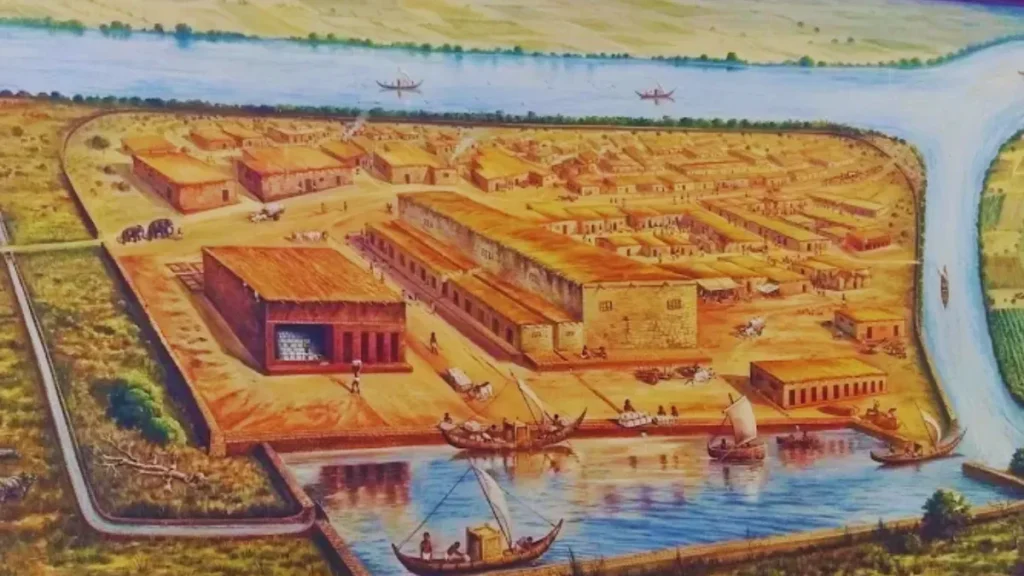
Lothal dockyard stands as one of the most extraordinary achievements of the ancient world, reflecting the advanced maritime knowledge of the Indus Valley Civilization. Located in the western Indian state of Gujarat, this historic structure is believed to be the world’s oldest known dockyard. It offers strong evidence that the people of the Harappan era were skilled traders, engineers, and city planners. Today, Lothal dockyard continues to attract historians, archaeologists, students, and travelers who want to understand India’s rich and intelligent past.
Where Is Lothal Dockyard Located?
Lothal dockyard is situated near the village of Lothal in the Ahmedabad district of Gujarat. It lies close to the Sabarmati River’s ancient course and was once connected to the Gulf of Khambhat. This location was carefully chosen by the Harappans for trade and transport purposes.
The site belongs to the famous Indus Valley Civilization, also known as the Harappan Civilization, which flourished around 2400 BCE. Lothal was one of the southernmost cities of this civilization and played a key role in overseas trade.
Today, the site is maintained by the Archaeological Survey of India and is open to visitors who want to explore ancient history up close.
Historical Background of Lothal
Lothal was discovered in 1954 during archaeological surveys conducted in Gujarat. Excavations were carried out between 1955 and 1960. The findings shocked the world because they revealed a well-planned city with modern features such as drainage systems, warehouses, and a large dockyard.
The name “Lothal” is believed to mean “Mound of the Dead” in Gujarati. However, the city was once a busy trade center filled with life and activity. Archaeologists found beads, seals, tools, and pottery that show Lothal had strong trade connections with regions as far as Mesopotamia.
The most important discovery at the site was the Lothal dockyard, which clearly proves that the Harappans understood tidal movements, water control, and marine engineering.
What Makes Lothal Dockyard So Special?
Advanced Engineering Design
The Lothal dockyard was not a simple water tank. It was a carefully designed structure built with baked bricks. The rectangular basin measures approximately 214 meters long and 36 meters wide. The design allowed ships to enter and leave safely even during changing tides.
The dockyard had an inlet channel that connected it to the river. This channel helped control the flow of water. The builders also created a spillway system to prevent flooding during heavy rains. This level of planning shows deep knowledge of hydraulics and civil engineering.
Strategic Location for Trade
Lothal dockyard was built near the Gulf of Khambhat, which provided access to the Arabian Sea. From here, traders could sail to distant lands. Archaeological evidence shows that Lothal traded beads, gems, and ornaments with Mesopotamia, modern-day Iraq.
The dockyard allowed ships to anchor safely and load or unload goods. Nearby warehouses were used to store products before shipping them to other regions. This system proves that Lothal was a well-organized port city.
Evidence of Maritime Activities
Many artifacts discovered at Lothal support the idea that it was a major maritime center. These include:
- Seals with ship carvings
- Marine shells
- Bead-making workshops
- Standardized weights and measures
All these findings strengthen the importance of Lothal dockyard as a center of sea trade in ancient times.
Structure and Layout of Lothal Dockyard
Rectangular Basin
The main feature of Lothal dockyard is its large rectangular basin. It was constructed using burnt bricks, which were strong and durable. The walls were thick enough to withstand water pressure.
The size of the dock suggests it could handle medium-sized vessels. The design also allowed water levels to be managed during high and low tides.
Inlet and Outlet Channels
The engineers of Lothal created a smart water management system. An inlet channel allowed water to enter the dockyard during high tide. An outlet channel helped drain excess water.
This system prevented water stagnation and protected ships from damage. It also kept the dock functional throughout the year.
Warehouse Connection
Close to the dockyard, archaeologists discovered a large warehouse built on a raised platform. This structure was used to store goods before export.
The proximity of the warehouse to the dockyard made trade operations smooth and efficient. Goods could be easily moved from storage to ships.
Importance of Lothal Dockyard in the Indus Valley Civilization
The Lothal dockyard highlights the technological and economic strength of the Indus Valley Civilization. While cities like Mohenjo-daro and Harappa are known for urban planning, Lothal stands out for its maritime achievements.
The presence of a dockyard shows that trade was not limited to land routes. The Harappans used sea routes for international trade. This helped them grow economically and culturally.
The dockyard also reflects centralized planning. Such a large structure required skilled workers, organized labor, and leadership. This indicates a highly developed society.
Trade Connections of Lothal
Trade with Mesopotamia
Archaeological evidence suggests that Lothal had trade relations with Mesopotamia. Seals found in Mesopotamian cities show similarities with Harappan seals. Some inscriptions also mention trade with a region called “Meluhha,” which many scholars believe refers to the Indus Valley region.
The Lothal dockyard played a key role in exporting goods such as:
- Beads made from semi-precious stones
- Ivory products
- Cotton textiles
- Metal tools
In return, traders may have imported metals and other valuable materials.
Inland Trade Network
Lothal was also connected to other Harappan cities through land routes. Goods were transported using bullock carts and riverboats. The dockyard served as a gateway for both inland and overseas trade.
Daily Life Around Lothal Dockyard
The presence of bead factories, pottery workshops, and residential areas shows that Lothal was a lively town. Craftsmen worked near the dockyard to produce goods for trade.
The city had a well-planned drainage system, straight roads, and brick houses. The people of Lothal followed an organized lifestyle. The dockyard was at the heart of economic activities, providing jobs and opportunities.
Decline of Lothal Dockyard
Around 1900 BCE, the Indus Valley Civilization began to decline. Flooding is believed to be one of the major reasons for the decline of Lothal. The changing course of rivers may have reduced access to the sea.
Over time, the dockyard lost its importance as trade decreased. Eventually, the city was abandoned. However, the remains of Lothal dockyard still tell the story of a once-thriving port.
Lothal Archaeological Museum
Visitors to Lothal can explore the on-site museum managed by the Archaeological Survey of India. The museum displays various artifacts found during excavations.
Some key exhibits include:
- Terracotta figurines
- Stone beads
- Seals with animal carvings
- Ancient tools and pottery
The museum helps visitors understand the importance of Lothal dockyard and its role in ancient trade.
Best Time to Visit Lothal Dockyard
The best time to visit Lothal dockyard is between October and March when the weather in Gujarat is pleasant. Summers can be very hot, making it difficult to explore the site comfortably.
The site is located about 80 kilometers from Ahmedabad and can be reached by road. Many tourists combine their visit with other historical attractions in Gujarat.
Why Lothal Dockyard Matters Today
Lothal dockyard is not just an ancient structure. It represents the scientific thinking and practical knowledge of early Indian civilization. It proves that thousands of years ago, people in this region understood maritime trade, engineering, and city planning.
The dockyard also strengthens India’s historical identity as a trading nation. It shows that global connections existed long before modern technology.
For students, researchers, and history lovers, Lothal dockyard offers valuable lessons about innovation and sustainability. The structure demonstrates how ancient people adapted to natural conditions and used resources wisely.
Also read: Lothal: Complete History, Discovery, Dockyard, Civilization, and Importance
Interesting Facts About Lothal Dockyard
- It is considered the world’s earliest known dockyard.
- It was built around 2400 BCE.
- The dock was connected to the Gulf of Khambhat through an ancient river channel.
- The city had one of the earliest known bead-making industries.
- The drainage system of Lothal was highly advanced for its time.
These facts make Lothal dockyard one of the most important archaeological discoveries in India.
Preservation and Future Development
The Archaeological Survey of India continues to preserve and maintain the site. Efforts are being made to promote Lothal as a major heritage tourism destination.
There are also plans to develop a National Maritime Heritage Complex near the site. This project aims to highlight India’s long maritime history and showcase the significance of Lothal dockyard on a global stage.
Also read: Lothal Gujarat: Discover the World’s Oldest Dockyard and India’s 4,000-Year-Old Maritime Marvel
Conclusion
Lothal dockyard is a remarkable symbol of ancient engineering and maritime excellence. It shows that the Indus Valley Civilization was far ahead of its time in trade, planning, and innovation. From its carefully designed basin to its strategic location, every aspect of the dockyard reflects intelligence and skill.
Even today, Lothal dockyard continues to inspire historians and engineers. It reminds us that India’s connection with the sea is thousands of years old. Visiting this historic site is not just a journey into the past but also an opportunity to appreciate the brilliance of early human civilization.
The legacy of Lothal dockyard remains strong, proving that great ideas and smart planning can stand the test of time.