
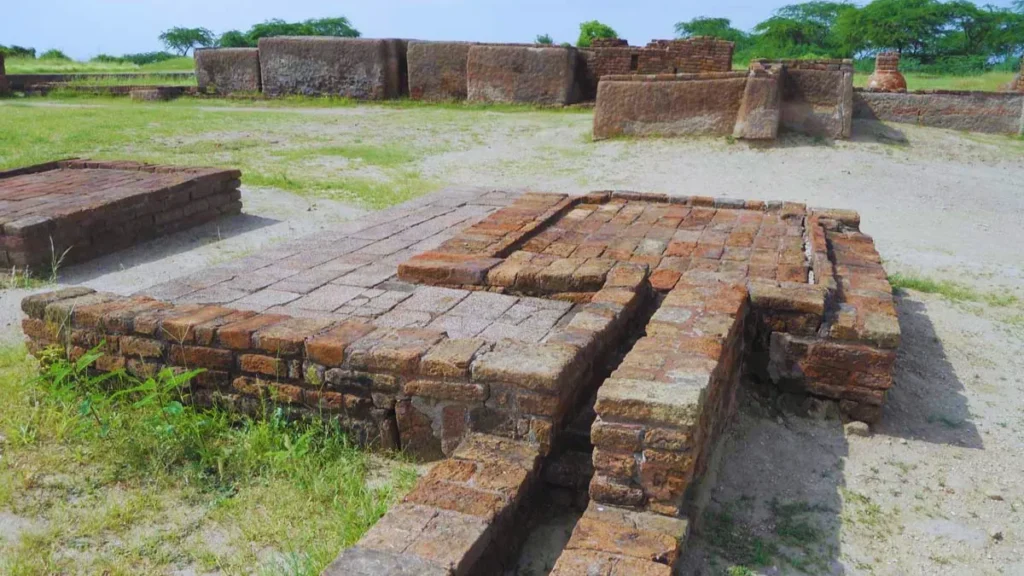
Introduction: Unraveling the Mystery of Lothal’s Decline
The ancient city of Lothal, one of the most remarkable urban centers of the Indus Valley Civilization, has long fascinated historians, archaeologists, and researchers worldwide. Known for its advanced dockyard, maritime trade networks, and sophisticated urban planning, Lothal stood as a shining example of early human ingenuity.
However, like many other prominent Harappan cities, Lothal eventually declined and was abandoned. For decades, scholars have debated the reasons behind this collapse—ranging from climate change and droughts to tectonic activity and river shifts.
A recent scientific study now offers a compelling new perspective. It suggests that a significant drop in sea levels around 4,200 years ago may have played a crucial role in the downfall of Lothal. This finding adds an important dimension to our understanding of how environmental changes influenced one of the world’s earliest civilizations.
The Historical Significance of Lothal
A Maritime Marvel of the Indus Valley Civilization
Lothal, located in present-day Gujarat, India, was one of the southernmost cities of the Harappan civilization. It flourished approximately between 2400 BCE and 1900 BCE and served as a major trading hub connecting the Indian subcontinent with regions such as Mesopotamia.
What set Lothal apart was its world’s earliest known dockyard, an engineering feat that highlights the advanced knowledge of hydraulics and tidal movements possessed by the Harappans.
Key Features of Lothal
| Feature | Description |
|---|---|
| Dockyard | One of the oldest known tidal docks in the world |
| Trade | Extensive maritime trade with Mesopotamia |
| Urban Planning | Grid-based city layout with drainage systems |
| Industry | Bead-making factories and metallurgy |
| Water Management | Advanced drainage and reservoir systems |
The city’s strategic location near the Sabarmati River estuary allowed ships to access the Arabian Sea, making it a vital node in ancient trade networks.
The Meghalayan Age: A Period of Climatic Upheaval
What is the Meghalayan Age?
Geologists identify the last 4,200 years as the Meghalayan Age, a period marked by significant climatic instability. This era began with severe and recurring monsoon failures, leading to widespread drought conditions.
Climate and Civilization Collapse
The timeline of the Meghalayan Age coincides closely with the decline of the Harappan civilization, particularly between 4,200 and 3,800 years before present (BP).
| Timeline | Event |
|---|---|
| ~4200 BP | Beginning of Meghalayan Age |
| 4200–3800 BP | Decline of Harappan urban centers |
| Post 3800 BP | Migration and deurbanization |
Researchers have long suspected that these climatic shifts led to reduced agricultural productivity, water scarcity, and eventual migration of populations.
The New Study: Evidence of Sea-Level Decline at Lothal
Research Background
A groundbreaking study led by Archana Das, a research scholar from Assam, along with scientists from the Institute of Seismological Research (ISR) and the Birbal Sahni Institute of Palaeosciences (BSIP), has introduced new evidence into this debate.
The study, titled:
“Evidence for seawater retreat with the advent of Meghalayan era (~4200 a BP) in a coastal Harappan settlement”
was recently published in the prestigious AGU journal Geochemistry, Geophysics, Geosystems.
Methodology: How Scientists Studied Lothal’s Past
To understand environmental changes at Lothal, researchers conducted detailed geological and chemical analyses.
Key Techniques Used
| Method | Purpose |
|---|---|
| Sediment Analysis | To study historical environmental conditions |
| Carbon & Sulfur Isotopes | To detect marine vs freshwater influence |
| Foraminifera Study | To identify marine microorganisms |
| Radiocarbon Dating | To determine age of samples |
| Optical Dating | To analyze sediment deposition timeline |
Samples were collected from a trench in the ancient dockyard area, providing a direct link to Lothal’s maritime past.
Four Environmental Phases Identified
The study revealed four distinct environmental phases spanning from approximately 5,030 to 2,070 years BP.
Phase-wise Environmental Changes
| Phase | Time Period (BP) | Environmental Condition |
|---|---|---|
| Phase 1 | ~5030 BP | Strong marine environment |
| Phase 2 | ~4200 BP | Abrupt change, receding sea |
| Phase 3 | ~3800 BP | Increasing dryness |
| Phase 4 | ~2070 BP–Present | Dry, inland conditions |
Interpretation
- Phase 1: Lothal was a thriving coastal settlement with active marine influence.
- Phase 2: A rapid drop in sea levels began, marking a major environmental shift.
- Phase 3: Dry conditions intensified, reducing water availability.
- Phase 4: The region became largely dry, similar to its current state.
The Role of Sea-Level Decline in Lothal’s Collapse
Drying of the Dockyard
One of the most significant findings of the study is that the receding sea level likely dried up Lothal’s dockyard, which was central to its economic and cultural life.
Without sufficient water levels:
- Ships could no longer dock
- Trade routes became inaccessible
- Economic activity declined rapidly
Impact on Trade
Lothal’s economy depended heavily on maritime trade. The decline in sea levels would have severely disrupted:
- Export of beads and crafts
- Import of raw materials
- Long-distance trade networks
| Impact Area | Effect |
|---|---|
| Maritime Trade | Severely reduced |
| Transportation | Ships unable to navigate |
| Economy | Collapse of trade-based economy |
| Population | Migration to other regions |
Multi-Proxy Evidence: A Strong Scientific Case
The study stands out because it uses multi-proxy evidence, meaning multiple independent scientific indicators support the same conclusion.
Key Evidence
- Decline in marine microorganisms (foraminifera)
- Changes in carbon and sulfur composition
- Sediment patterns indicating drying conditions
- Radiocarbon dating aligning with Meghalayan Age
This comprehensive approach strengthens the argument that environmental changes—not just human factors—played a major role in Lothal’s decline.
Climate Change and Human Migration
Forced Migration of Harappans
The Meghalayan Age brought prolonged droughts, forcing Harappan populations to migrate in search of water and resources.
Migration Patterns
| Direction | Reason |
|---|---|
| Southwest | Access to water sources |
| Inland Regions | Agricultural opportunities |
| Smaller Settlements | Adaptation to new conditions |
Lothal, once a thriving port city, gradually lost its population as people moved to more sustainable environments.
Comparing Lothal with Other Harappan Cities
Lothal was not alone in its decline. Other major Harappan cities like Dholavira also faced similar challenges.
Comparison Table
| City | Key Issue | Outcome |
|---|---|---|
| Lothal | Sea-level decline | Loss of trade, abandonment |
| Dholavira | Water scarcity | Urban decline |
| Mohenjo-daro | Flooding & river shifts | Gradual abandonment |
| Harappa | Environmental stress | Deurbanization |
This suggests a broader pattern of environmental disruption affecting the entire civilization.
Scientific Insights: What Makes This Study Important
Key Contributions
- Provides direct geological evidence of sea-level change
- Links environmental change with economic collapse
- Offers a new perspective beyond drought-only theories
- Enhances understanding of ancient climate impacts
Educational Background of the Lead Researcher
Archana Das, the lead author of the study, has an impressive academic background:
- Graduation in Geology from Gauhati University
- Master’s degree from Maharaja Sayajirao University of Baroda
- PhD from Kachchh University, Gujarat
Her research focused on:
“Fluvial Response to Climate, Tectonics and Sea Level Changes during Late Quaternary period on the Southern Kachchh mainland, Western India.”
This expertise played a crucial role in analyzing Lothal’s geological history.
Broader Implications for Modern Climate Studies
Lessons from Lothal
The story of Lothal is not just about the past-it holds valuable lessons for the present and future.
Key Takeaways
- Climate change can disrupt even advanced civilizations
- Coastal regions are highly vulnerable to sea-level changes
- Economic systems dependent on natural conditions are fragile
- Adaptation is crucial for survival
Modern Relevance: A Warning from History
Today, the world faces rising sea levels due to global warming. Ironically, while Lothal suffered from falling sea levels, modern cities face the opposite threat.
However, the underlying lesson remains the same:
Environmental changes-whether rising or falling sea levels-can reshape human civilization.
Conclusion: Rethinking the Fall of Lothal
The decline of Lothal was not caused by a single factor but rather a combination of environmental and climatic changes. The new study sheds light on an often-overlooked factor: a significant drop in sea levels around 4,200 years ago.
This event likely:
- Dried up the dockyard
- Disrupted trade
- Triggered economic collapse
- Forced migration
By combining geological evidence with archaeological insights, researchers have taken a major step toward solving the mystery of Lothal’s decline.
As we continue to study ancient civilizations, Lothal serves as a powerful reminder of humanity’s deep connection with nature—and the consequences of environmental change.
Frequently Asked Questions (FAQs)
Why is Lothal important?
Lothal is one of the most significant sites of the Indus Valley Civilization, known for its dockyard and maritime trade.
What caused the decline of Lothal?
Recent studies suggest that a drop in sea levels around 4,200 years ago played a major role.
What is the Meghalayan Age?
It is a geological age marked by climate instability and droughts beginning around 4,200 years ago.
How did sea-level changes affect Lothal?
They likely dried up the dockyard, disrupting trade and leading to economic decline.
What can we learn from Lothal today?
It highlights the impact of environmental changes on human societies and the importance of sustainability.