
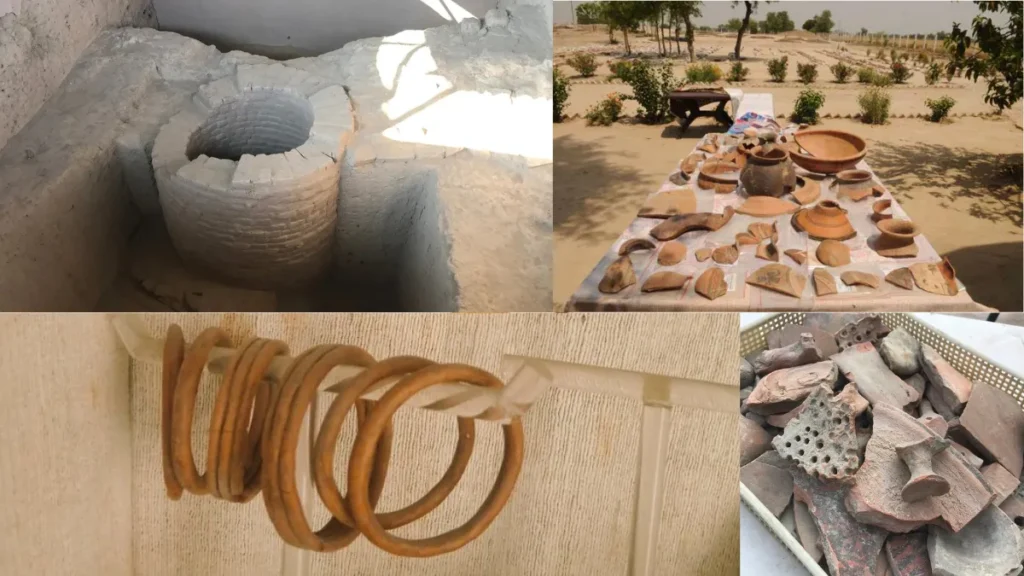
The historic site of banawali stands as a remarkable window into India’s ancient past, offering valuable insights into early urban civilization. Located on the dry bed of the once-mighty Saraswati River, banawali is an important archaeological site that reflects a continuous cultural sequence spanning from the Pre-Harappan period to the post-Harappan Bara culture. The site was excavated by renowned archaeologist Dr. R. S. Bisht under the Archaeological Survey of India, uncovering layers of history that date back thousands of years.
Historical Background of Banawali
The archaeological findings at banawali reveal a three-phase cultural sequence:
- Pre-Harappan (Early Harappan)
- Harappan Civilization
- Bara (Post-Harappan Culture)
Each phase reflects significant developments in settlement planning, craftsmanship, and lifestyle.
Pre-Harappan Phase (2600–2400 BCE)
The earliest phase of banawali showcases a well-organized settlement with carefully planned houses and fortified structures built using molded bricks. This indicates that even before the rise of the mature Harappan civilization, people in this region had already developed advanced architectural skills.
Pottery from this period shows a gradual transition in artistic style. Earlier painted designs became simpler over time, and the use of white pigment began to decline. However, the variety of pottery increased, including:
- Dish-on-stand
- Basins
- Jars
- Bowls
- Troughs
In addition to pottery, archaeologists discovered a wide range of artifacts made from semi-precious stones, terracotta, steatite, shell, faience, and copper. Bangles crafted from these materials reflect the aesthetic sensibilities and craftsmanship of the people.
Harappan Phase (2400–1900 BCE)
The Harappan phase marks the peak of development at banawali. The settlement evolved into a well-planned fortified town, designed in a radial pattern—an advanced urban layout rarely seen in ancient sites.
Pottery during this period became more refined and decorative. Red ware adorned with animal and floral motifs was common. Typical pottery forms included:
- Dish-on-stand
- S-shaped jars
- Perforated jars
- Goblets
- Cooking vessels
- Beakers and basins
One of the most significant discoveries from this phase is a terracotta model of a plough, which is considered a rare and complete example from the Harappan civilization. This artifact provides strong evidence of agricultural practices during that time.
Other important findings include:
- Beads made of semi-precious stones and gold
- Terracotta animal figurines
- Inscribed steatite seals
- Copper fish hooks
- Ivory and bone toys
- Chert blades and standardized weights
- Barley grains indicating agricultural activity
These discoveries highlight the economic, cultural, and technological advancement of the Harappan people at banawali.
Bara Culture (1900–1700 BCE)
The final phase at banawali represents the Bara culture, which followed the decline of the Harappan civilization. This period is mainly identified through its distinctive pottery.
The pottery of this phase is:
- Thick and sturdy
- Made from fine clay
- Carefully fired
- Finished with a dark, oily sheen
Unlike earlier periods, very few artifacts were found from this phase. Most classical Harappan objects disappeared, leaving behind only limited items such as terracotta nodules and cakes.
Cultural Timeline of Banawali
| Period | Time Range | Key Features |
|---|---|---|
| Pre-Harappan | 2600–2400 BCE | Planned houses, fortified walls, simple painted pottery |
| Harappan | 2400–1900 BCE | Fortified town, advanced pottery, seals, plough model |
| Bara (Post-Harappan) | 1900–1700 BCE | Thick pottery, fewer artifacts, cultural decline |
How to Reach Banawali
Banawali is well-connected by air, rail, and road, making it accessible for travelers and researchers.
By Air
The nearest airport is Indira Gandhi International Airport, located approximately 230 km from banawali.
By Train
The closest railway station is Bhattu Kalan, which lies about 25 km away from the site.
By Road
Banawali is connected via National Highway 9, offering smooth road access to Fatehabad and nearby cities. Regular bus services operated by Haryana Roadways pass through Fatehabad, ensuring convenient travel.
Why Banawali Matters Today
The significance of banawali lies in its ability to bridge different phases of ancient Indian history. From early settlement planning to the sophistication of the Harappan civilization and the eventual transition into the Bara culture, the site provides a continuous narrative of human development.
For historians, archaeologists, and travelers alike, banawali remains a fascinating destination that sheds light on the roots of urban civilization in the Indian subcontinent.