
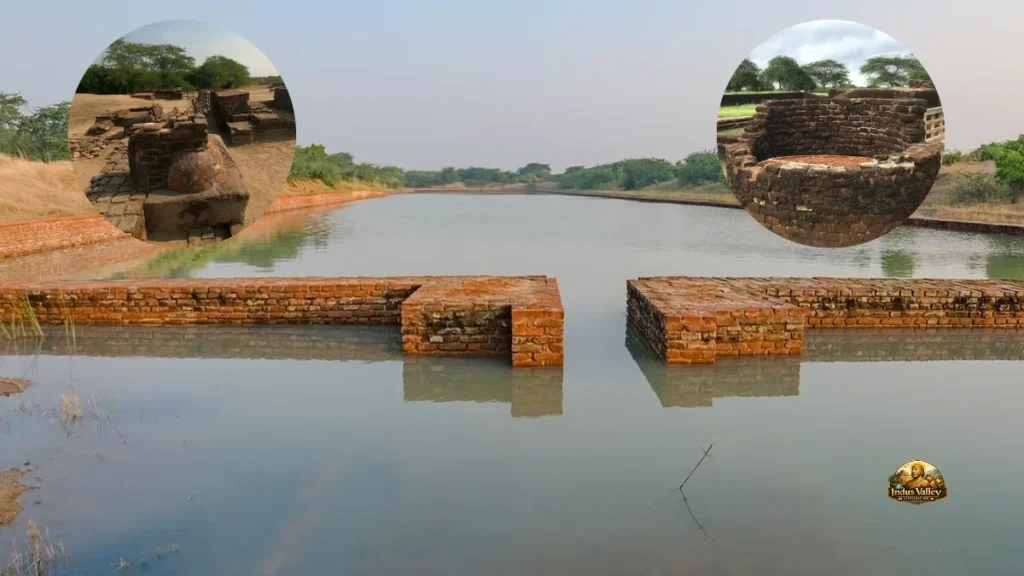
Lothal India is one of the most fascinating archaeological sites connected to the ancient Indus Valley Civilization. Located in the western state of Gujarat, this historic city offers a glimpse into one of the world’s earliest urban cultures. Known for its advanced town planning, impressive dockyard, and thriving trade networks, Lothal played a crucial role in the economic and cultural development of ancient India.
Today, Lothal India stands as an important symbol of human innovation and early urban planning. Archaeologists and historians consider it one of the most significant discoveries related to the Harappan Civilization. Visitors, students, and researchers continue to study this ancient city to understand how people lived, traded, and developed complex societies thousands of years ago.
Where Is Lothal India Located
Lothal India is located in the Ahmedabad district of Gujarat, near the village of Saragwala. The site lies about 80 kilometers southwest of Ahmedabad and was once connected to the ancient Sabarmati River and the Gulf of Khambhat. During the time of the Indus Valley Civilization, this strategic location allowed Lothal to become an important trading port.
The region around Lothal was well suited for maritime activities. Ancient waterways connected the settlement with the sea, making it easier for traders to transport goods to distant regions such as Mesopotamia and other parts of the ancient world. The geographical location of Lothal played a major role in its development as a commercial hub.
Today, Lothal India is maintained as a protected archaeological site and attracts tourists, researchers, and history enthusiasts who want to learn about one of India’s earliest urban settlements.
Discovery of Lothal India
The discovery of Lothal India is an important chapter in Indian archaeology. The site was discovered in 1954 by the Archaeological Survey of India. Excavations began in 1955 under the supervision of archaeologist S. R. Rao and continued for several years.
Before the discovery of Lothal, most known Indus Valley sites were located in present-day Pakistan. The excavation of Lothal proved that the Harappan Civilization also extended into western India, particularly the region of Gujarat.
During the excavation process, archaeologists uncovered houses, streets, drainage systems, workshops, warehouses, and a massive dockyard. These findings revealed that Lothal was not just a settlement but a well-planned city with strong economic activity and maritime trade.
The discovery of Lothal India significantly expanded our understanding of the Indus Valley Civilization and its widespread influence.
The Meaning of the Name Lothal
The name Lothal is believed to have originated from the local Gujarati language. It roughly translates to “Mound of the Dead.” This name was likely given by villagers long before the archaeological excavations began.
However, the historical significance of Lothal India goes far beyond the meaning of its name. Instead of being remembered simply as an abandoned mound, Lothal is now recognized as a remarkable example of ancient engineering, trade, and urban development.
Historical Background of Lothal India
Lothal India dates back to around 2400 BCE during the mature phase of the Indus Valley Civilization. This civilization is considered one of the earliest urban cultures in human history, along with those of Mesopotamia and ancient Egypt.
The people of Lothal were skilled engineers, craftsmen, and traders. They built organized cities with well-planned streets, drainage systems, and residential areas. The settlement was designed carefully to manage water flow and prevent flooding.
Archaeological evidence suggests that Lothal remained active for several centuries before it eventually declined around 1900 BCE. Natural disasters such as floods may have contributed to the decline of the settlement.
Despite its eventual abandonment, Lothal India continues to provide valuable insights into early human civilization.
Urban Planning and City Structure in Lothal India
One of the most impressive aspects of Lothal India is its advanced urban planning. The city was carefully designed with different sections for residential areas, commercial spaces, and industrial workshops.
The settlement was divided into two main parts: the acropolis and the lower town. The acropolis was the elevated area where administrative buildings and important structures were located. The lower town was where most people lived and worked.
The streets of Lothal were arranged in a grid pattern, similar to other cities of the Indus Valley Civilization. Houses were constructed using baked bricks and were equipped with bathrooms and drainage systems.
The drainage system in Lothal India was particularly advanced. Covered drains ran along the streets and connected to a larger network that carried wastewater away from residential areas. This demonstrates the high level of civic planning achieved by the Harappan people.
The Famous Dockyard of Lothal India
The dockyard of Lothal India is one of the most remarkable discoveries at the site. It is considered the world’s earliest known dockyard, highlighting the city’s importance in maritime trade.
The dockyard was a large rectangular basin constructed with brick walls. It was connected to an ancient river channel that allowed ships to enter and leave the port. This design helped regulate water levels and protected vessels from strong tides.
The existence of this dockyard proves that Lothal was a major center for sea trade. Traders from Lothal likely exchanged goods with regions such as Mesopotamia, Oman, and Bahrain.
This advanced maritime infrastructure makes Lothal India one of the most significant trading ports of the ancient world.
Trade and Economy of Lothal India
Trade was the foundation of economic life in Lothal India. Archaeological evidence shows that the people of Lothal were actively involved in both local and international trade.
The city produced various goods, including beads, jewelry, pottery, and metal tools. Craftsmen in Lothal were especially famous for their bead-making industry. They used materials such as carnelian, agate, and jasper to create beautifully polished beads.
Many seals and weights discovered at the site suggest a well-organized trading system. Standardized weights were used to measure goods accurately during trade transactions.
Artifacts found in Mesopotamia also indicate that merchants from Lothal India were involved in long-distance trade. These connections show how early civilizations were linked through complex trade networks.
Craftsmanship and Industries in Lothal India
Lothal India was not only a trading center but also an important industrial hub. Several workshops discovered during excavations indicate that various crafts and industries flourished in the city.
Bead-making was one of the most prominent industries. Craftsmen used advanced techniques to heat, shape, and polish stones into decorative beads.
The city also had workshops for metalworking, pottery production, and shell crafting. Artisans produced ornaments, tools, and decorative items that were traded across different regions.
The quality of craftsmanship found in Lothal India demonstrates the high level of skill and creativity possessed by its people.
The Warehouse of Lothal India
Another important structure discovered at the site is the warehouse. This large building was used to store goods before they were transported for trade.
The warehouse was built on a raised platform to protect stored items from flooding. Archaeologists believe that merchants stored goods such as beads, cotton textiles, metals, and other valuable materials in this facility.
The presence of such a storage facility further confirms that Lothal India was a major trading center in ancient times.
Daily Life of People in Lothal India
The daily life of people living in Lothal India was organized and sophisticated. The residents lived in brick houses that often had multiple rooms and private wells.
Most households had access to proper sanitation systems. Bathrooms were connected to drainage channels that carried wastewater outside the house.
People in Lothal were involved in different occupations such as trading, crafting, farming, and administration. Farmers in the surrounding areas likely supplied food to the city, while craftsmen produced goods for trade.
Archaeological discoveries such as toys, games, and ornaments suggest that people in Lothal enjoyed a rich cultural life.
Important Artifacts Found in Lothal India
Excavations at Lothal India have revealed a wide range of fascinating artifacts. These discoveries help historians understand the culture and technology of the Harappan Civilization.
Some of the most notable artifacts include seals made from steatite stone. These seals often feature animal symbols and inscriptions from the undeciphered Indus script.
Terracotta figurines, pottery, tools, and jewelry have also been discovered at the site. Many of these objects show detailed craftsmanship and artistic expression.
Another important discovery was a set of cubical weights used for trade measurements. These weights indicate that the people of Lothal followed a standardized system of commerce.
Lothal Museum and Preservation of the Site
To preserve the historical importance of Lothal India, a museum was established near the archaeological site. The Lothal Archaeological Museum displays many artifacts discovered during the excavation.
Visitors can see ancient seals, tools, ornaments, pottery, and models of the ancient city. These exhibits help people understand how the settlement functioned thousands of years ago.
The museum also provides educational information about the Indus Valley Civilization and the role of Lothal in ancient trade networks.
Preserving Lothal India is essential for protecting one of the most valuable pieces of India’s ancient heritage.
Also read: Lothal Dockyard: The World’s Oldest Known Maritime Engineering Marvel
Tourism and Visiting Lothal India
Today, Lothal India is an important historical tourism destination in Gujarat. Visitors interested in archaeology and ancient history often travel to the site to explore the remains of this remarkable civilization.
Tourists can walk through the ruins of the ancient city, observe the famous dockyard, and visit the nearby museum. The peaceful surroundings and historical atmosphere make it a unique place to learn about early urban life.
The best time to visit Lothal is during the cooler months from October to March, when the weather in Gujarat is pleasant for sightseeing.
As awareness about India’s ancient heritage grows, Lothal India continues to attract more visitors from across the country and around the world.
Why Lothal India Is Important in World History
Lothal India holds a special place in the history of human civilization. Its advanced urban planning, early maritime trade system, and sophisticated industries demonstrate the remarkable achievements of the Indus Valley people.
The discovery of the dockyard alone changed historians’ understanding of ancient maritime technology. It shows that people living over four thousand years ago had the knowledge and skills to build complex port facilities.
Lothal also highlights the interconnected nature of ancient civilizations. Trade between Lothal and regions such as Mesopotamia proves that global economic networks existed even in ancient times.
Also read: Lothal Gujarat: Discover the World’s Oldest Dockyard and India’s 4,000-Year-Old Maritime Marvel
Conclusion
Lothal India remains one of the most important archaeological discoveries related to the Indus Valley Civilization. This ancient port city reveals how early societies developed advanced systems of urban planning, trade, and craftsmanship.
From its impressive dockyard to its organized streets and thriving industries, Lothal provides a detailed picture of life in one of the world’s earliest civilizations. The site continues to inspire historians, archaeologists, and travelers who seek to understand humanity’s ancient past.
As research continues and preservation efforts grow stronger, Lothal India will remain a vital link connecting modern society with the remarkable achievements of early human civilization.