
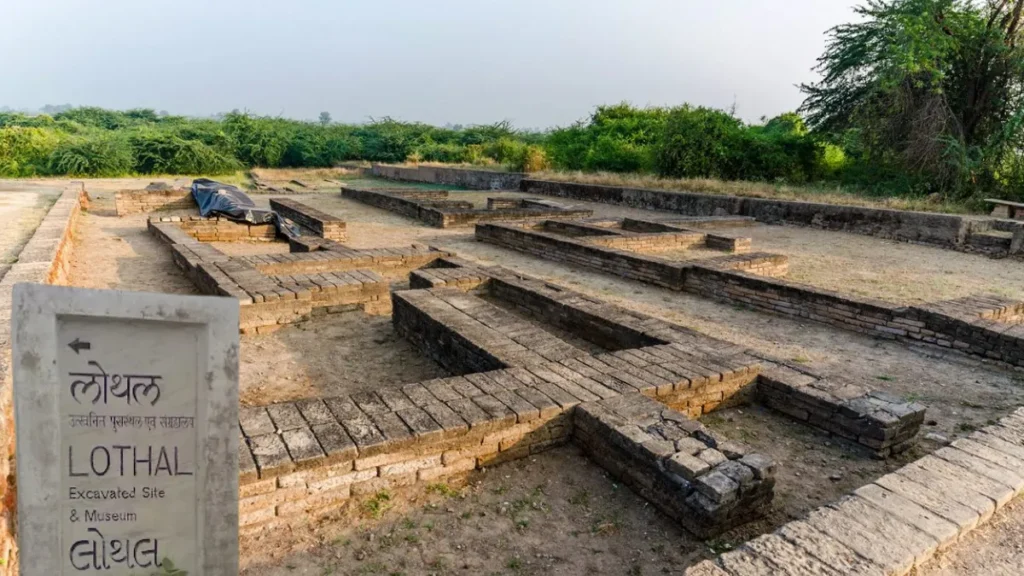
Lothal Gujarat is one of the most important archaeological sites in India and a proud symbol of the ancient Indus Valley Civilization. Located in the state of Gujarat, this ancient town gives us deep knowledge about early urban planning, maritime trade, and advanced engineering that existed more than 4,000 years ago. Lothal Gujarat is not just a historical place; it is a living example of India’s rich cultural and scientific heritage.
This detailed guide explains the history, importance, architecture, trade system, discoveries, travel information, and interesting facts about Lothal Gujarat in simple and clear English.
Location and Basic Information About Lothal Gujarat
Lothal Gujarat is located in the Ahmedabad district of Gujarat, near the village of Saragwala. It is around 80 kilometers from Ahmedabad city. In ancient times, Lothal was connected to the Gulf of Khambhat through a river channel, which helped it become a major port city.
Quick Facts About Lothal Gujarat
| Detail | Information |
|---|---|
| Location | Ahmedabad District, Gujarat |
| Civilization | Indus Valley Civilization |
| Period | Around 2400 BCE to 1900 BCE |
| Discovered | 1954 |
| Excavation Started | 1955 |
| Famous For | Ancient Dockyard and Trade Center |
| Meaning of Lothal | Mound of the Dead |
These facts show why Lothal Gujarat is considered one of the most important archaeological sites in India.
Historical Background of Lothal Gujarat
Lothal Gujarat was a part of the Indus Valley Civilization, also known as the Harappan Civilization. This civilization is one of the oldest in the world and was known for its well-planned cities, drainage systems, and strong trade networks.
Lothal was discovered in 1954 by the Archaeological Survey of India. Excavation work began in 1955 under archaeologist S. R. Rao. During excavation, many structures and artifacts were found that proved Lothal was an important trade and industrial center.
The city was active between 2400 BCE and 1900 BCE. Over time, changes in river patterns and natural disasters may have led to its decline.
Importance of Lothal Gujarat in the Indus Valley Civilization
Lothal Gujarat played a major role in sea trade. It is famous for having one of the world’s earliest known dockyards. This dockyard allowed ships to load and unload goods easily.
Archaeological evidence shows that Lothal had trade connections with Mesopotamia, which is present-day Iraq. Seals found in Mesopotamia match those found in Lothal, proving international trade relations.
Trade Items of Lothal Gujarat
| Exported Items | Imported Items (Likely) |
|---|---|
| Beads | Raw materials |
| Gemstones | Metals |
| Ornaments | Luxury goods |
| Pottery | Rare stones |
| Shell products | Trade commodities |
The presence of standardized weights and measures shows that trade was systematic and well organized in Lothal Gujarat.
Urban Planning and Architecture of Lothal Gujarat
One of the most impressive features of Lothal Gujarat is its advanced city planning. The town was divided into two main sections: the upper town and the lower town.
City Structure Overview
| Section | Purpose |
|---|---|
| Upper Town | Administrative and elite residential area |
| Lower Town | Residential and industrial area |
| Dockyard Area | Trade and maritime activities |
| Warehouse | Storage of goods |
The streets were straight and properly aligned. Houses were built using baked bricks of standard size. This shows that the city was carefully planned before construction.
The Dockyard of Lothal Gujarat
The dockyard is the most famous structure of Lothal Gujarat. It is rectangular in shape and built with baked bricks. It had an inlet channel that allowed water to enter during high tide.
This structure proves that the people of Lothal had deep knowledge of tides, water flow, and ship management. Many experts consider it the oldest known dockyard in the world.
The Warehouse
Near the dockyard, a large warehouse was discovered. It was built on a raised platform to protect goods from floods. This warehouse was used to store trade items before shipping.
Drainage System
Like other Harappan cities, Lothal Gujarat had an excellent drainage system. Houses were connected to covered underground drains. This indicates strong knowledge of sanitation and public health.
Major Archaeological Discoveries at Lothal Gujarat
Excavations at Lothal Gujarat revealed many important artifacts that provide information about the lifestyle and economy of the people.
Important Artifacts Found at Lothal
| Artifact Type | Description |
|---|---|
| Seals | Used for trade identification |
| Beads | Made from carnelian, agate, and jasper |
| Ivory Scale | Evidence of accurate measurement system |
| Copper Tools | Tools and weapons |
| Terracotta Figurines | Toys and religious symbols |
| Painted Pottery | Daily use utensils |
The discovery of an ivory measuring scale shows that Lothal Gujarat had a precise system of measurement, which was important for trade.
Lothal Archaeological Museum
A museum has been established near the site to display the artifacts found during excavation. The museum helps visitors understand the daily life, trade practices, and culture of Lothal Gujarat.
Museum Highlights
| Section | What You Can See |
|---|---|
| Seal Gallery | Original Harappan seals |
| Bead Section | Semi-precious stone beads |
| Pottery Section | Decorated clay vessels |
| Tools Display | Copper and stone tools |
| Models | City layout and dockyard models |
Visiting the museum before exploring the site helps in understanding the ruins better.
Why Lothal Gujarat Is Important for Indian History
Lothal Gujarat is proof that ancient India had advanced knowledge of engineering, maritime trade, and urban planning. The dockyard alone shows technological progress that was rare in ancient times.
The city’s planned layout, drainage system, and standardized construction highlight the intelligence and organization of the Harappan people. Lothal Gujarat also shows that India was connected to international trade networks thousands of years ago.
Best Time to Visit Lothal Gujarat
The best time to visit Lothal Gujarat is between October and March. During this period, the weather is pleasant and suitable for outdoor exploration.
Weather Overview
| Season | Temperature Range | Travel Suitability |
|---|---|---|
| Summer (April–June) | 35°C to 45°C | Not Recommended |
| Monsoon (July–September) | Moderate Rain | Average |
| Winter (October–March) | 10°C to 28°C | Best Time to Visit |
Winter is the most comfortable season to explore the archaeological site.
How to Reach Lothal Gujarat
Lothal Gujarat is well connected by road and can be reached easily from major cities.
Travel Options
| Mode | Details |
|---|---|
| By Air | Nearest airport is Sardar Vallabhbhai Patel International Airport, Ahmedabad |
| By Train | Nearest station is Bhurkhi; Ahmedabad offers better connectivity |
| By Road | 2-hour drive from Ahmedabad |
Visitors usually prefer traveling by car from Ahmedabad for convenience.
Nearby Attractions Around Lothal Gujarat
Travelers visiting Lothal Gujarat can also explore nearby tourist attractions.
Nearby Places
| Attraction | Distance from Lothal | Famous For |
|---|---|---|
| Nalsarovar Bird Sanctuary | Approx. 60 km | Migratory birds |
| Ahmedabad City | Approx. 80 km | Heritage sites |
| Velavadar Blackbuck National Park | Approx. 140 km | Wildlife |
Combining these attractions with Lothal Gujarat makes the trip more enjoyable.
Visitor Tips for Lothal Gujarat
Wear comfortable walking shoes.
Carry water, especially during warmer months.
Visit the museum first for better understanding.
Hire a guide if available.
Avoid visiting during peak summer heat.
These simple tips will help you enjoy your visit to Lothal Gujarat.
Preservation and Future Development Plans
The Government of India is working on preserving Lothal Gujarat as a heritage site. Plans for a National Maritime Heritage Complex are underway to promote awareness of India’s ancient maritime history.
This development will help increase tourism and educate future generations about the importance of Lothal Gujarat.
Also read: Lothal: Complete History, Discovery, Dockyard, Civilization, and Importance
Interesting Facts About Lothal Gujarat
| Fact | Detail |
|---|---|
| Oldest Dockyard | Considered one of the earliest in the world |
| International Trade | Connected with Mesopotamia |
| Advanced Planning | Grid-pattern streets |
| Standard Weights | Used for trade accuracy |
| Skilled Craftsmanship | Famous for bead making |
These facts make Lothal Gujarat a remarkable example of ancient human achievement.
Also read: Where Is Harappa Located? Map Location, Modern Country, and Historical Importance
Conclusion
Lothal Gujarat stands as a shining example of India’s glorious ancient past. From its world-famous dockyard to its well-planned streets and organized trade system, every part of this historic site reflects intelligence, creativity, and progress.
Exploring Lothal Gujarat gives us valuable knowledge about the Indus Valley Civilization and its global connections. It reminds us that thousands of years ago, India was already a center of trade, engineering, and urban development.
By preserving and promoting Lothal Gujarat, we keep alive the story of a civilization that contributed greatly to human history. This ancient port city continues to inspire curiosity, pride, and respect for India’s rich heritage.