
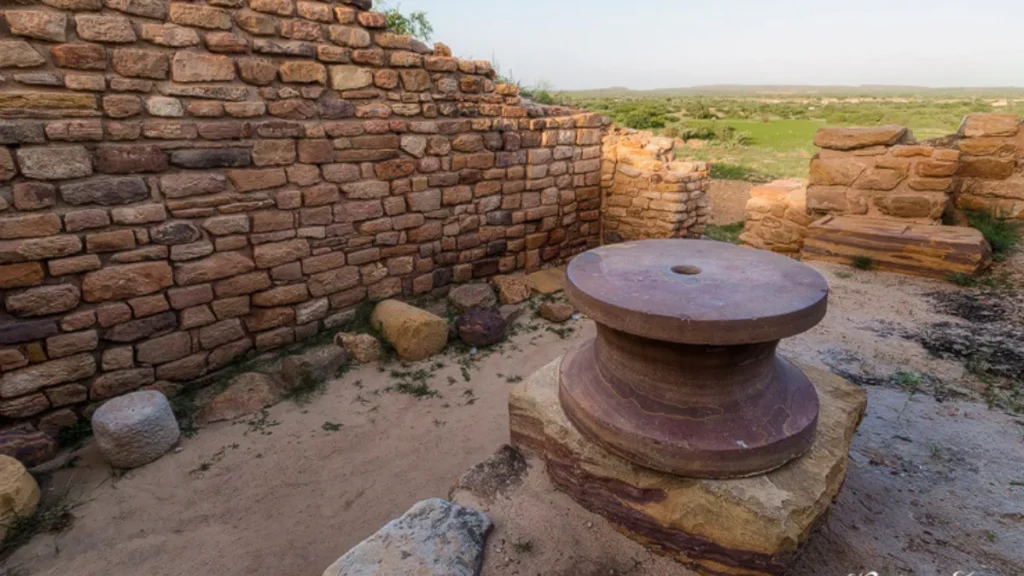
Dholavira Harappan civilization is one of the most important and well-preserved chapters of the ancient Indus Valley Civilization. Located in the dry region of the Rann of Kutch in present-day Gujarat, India, Dholavira stands as a powerful example of advanced town planning, water management, architecture, and social organization from nearly 4,500 years ago. This remarkable site has helped historians and archaeologists understand how early humans adapted to harsh environments and built one of the world’s earliest urban cultures.
Unlike many other Harappan cities, Dholavira shows a unique identity in planning, construction style, and use of natural resources. Its discoveries continue to reshape our understanding of ancient Indian history and civilization.
Discovery and Location of Dholavira
Dholavira was discovered in 1967 by archaeologist Jagat Pati Joshi of the Archaeological Survey of India. The site lies on Khadir Bet island in the Great Rann of Kutch, surrounded by seasonal salt marshes. This remote location made the settlement naturally protected while also allowing access to trade routes connecting Sindh, Rajasthan, and coastal regions.
The strategic position of Dholavira Harappan civilization helped it grow into a major center of trade and administration during the Indus Valley period.
Historical Timeline of Dholavira
Archaeological evidence suggests that Dholavira was occupied between approximately 3000 BCE and 1500 BCE. The city went through several phases of development, rise, decline, and rebuilding.
Early Phase
During the early stage, the settlement was small and mainly built using mud bricks. The foundations of city planning and water storage systems were laid during this time.
Mature Harappan Phase
This was the golden age of Dholavira Harappan civilization. Large stone structures, advanced drainage, massive reservoirs, and a strong administrative system emerged. Trade flourished, and the city became one of the most important Harappan centers.
Late Phase
Gradual climate change, reduced rainfall, and shifting trade routes likely contributed to the decline. The population slowly decreased, and by around 1500 BCE, the city was largely abandoned.
Unique City Planning of Dholavira
One of the most striking features of Dholavira Harappan civilization is its sophisticated city planning. The city was divided into three major sections:
The Citadel
The citadel was the highest and most fortified area, possibly used by rulers or administrators. It contained large ceremonial structures and important public spaces.
The Middle Town
This area housed officials, merchants, and skilled workers. It was well-planned with wide streets, drainage systems, and residential buildings.
The Lower Town
The lower town was the largest part of the city and was meant for common people. Houses here followed standardized designs, showing social order and urban discipline.
The entire city followed a geometric layout, reflecting advanced engineering knowledge.
Advanced Water Management System
Water management is the greatest achievement of Dholavira Harappan civilization. Located in a desert-like region with very little rainfall, the inhabitants developed one of the world’s earliest and most complex water conservation systems.
The city had more than sixteen massive reservoirs built using stone masonry. These reservoirs collected rainwater and stored water from nearby seasonal streams such as the Mansar and Manhar.
Channels, step-like structures, dams, and underground drains ensured that every drop of water was preserved. This system allowed the city to survive long dry periods and supports the idea that Dholavira was a highly planned and sustainable urban center.
Architecture and Construction Techniques
Unlike other Harappan cities that used baked bricks, Dholavira Harappan civilization mainly used finely cut stone blocks. This makes it unique among Indus Valley settlements.
Walls, houses, gateways, and public buildings were constructed with precision. The use of stone gave strength and durability, many structures still visible today after thousands of years.
Large gateways with guard rooms suggest controlled entry and exit points, indicating organized administration and security.
The Great Signboard of Dholavira
One of the most fascinating discoveries at Dholavira is a large signboard made of gypsum with ten Indus script symbols. It is considered the world’s oldest known signboard.
The symbols were placed above a gateway, likely representing the city’s name or an important message. This discovery shows that writing played a role in public communication during the Dholavira Harappan civilization.
Although the Indus script has not yet been fully decoded, this signboard highlights the advanced literacy and symbolic communication of the people.
Economic Life and Trade
Trade was a major strength of Dholavira Harappan civilization. The city was connected to inland and coastal trade routes that linked Mesopotamia, Oman, and other regions.
Archaeologists have found seals, beads, semi-precious stones, copper tools, shell ornaments, and pottery. These materials indicate active trade in goods such as:
- Carnelian beads
- Cotton textiles
- Shell items
- Metals like copper and bronze
- Agricultural products
The standardized weights and measures found at the site show a well-regulated economic system.
Agriculture and Food System
Despite its dry environment, the people of Dholavira practiced agriculture using intelligent water control techniques. Crops such as wheat, barley, pulses, and possibly millet were grown.
Animal remains suggest the domestication of cattle, sheep, goats, and camels. Fishing and hunting also supported daily life, especially due to the nearby seasonal wetlands.
The efficient food system helped sustain a large urban population for centuries.
Social Structure and Daily Life
The organized layout of Dholavira Harappan civilization reflects a well-structured society. Differences in housing size indicate social hierarchy, but the overall uniformity suggests limited inequality.
People lived in brick or stone houses with courtyards, wells, and drainage connections. Cleanliness and sanitation were clearly important aspects of daily life.
Artifacts such as toys, bangles, beads, and ornaments reveal that art, recreation, and personal decoration were part of everyday culture.
Religion and Belief System
Although no large temples have been found, evidence suggests spiritual practices were closely connected with nature. Fire altars, ritual platforms, and symbolic seals indicate religious activities.
Like other Harappan sites, worship may have focused on fertility, water, animals, and natural forces. The absence of grand religious monuments suggests a simple belief system centered on harmony with nature.
Scientific Knowledge and Engineering Skills
The planning and construction of Dholavira Harappan civilization show advanced scientific understanding. Precise measurements, uniform ratios, and alignment of structures reveal knowledge of geometry and mathematics.
The city’s drainage system ensured proper sanitation, while carefully sloped streets allowed smooth water flow. These features demonstrate engineering skills far ahead of their time.
Decline of the Dholavira Civilization
The decline of Dholavira Harappan civilization was gradual rather than sudden. Researchers believe several factors contributed:
- Long-term climate change and reduced monsoon rainfall
- Drying of nearby rivers and streams
- Earthquakes affecting water systems
- Breakdown of long-distance trade networks
As water became scarce, sustaining large populations became difficult, leading people to migrate to more fertile regions.
Archaeological Importance of Dholavira
Dholavira is one of the five largest Harappan sites and among the best preserved. Its discoveries have provided crucial insights into urban planning, water conservation, and social organization of ancient India.
In 2021, UNESCO declared Dholavira a World Heritage Site, recognizing its outstanding universal value and historical importance.
Also read: Dholavira: Complete History, Discovery, Civilization, and Importance
Difference Between Dholavira and Other Harappan Cities
Dholavira Harappan civilization stands apart from cities like Harappa and Mohenjo-daro in several ways:
- Extensive use of stone instead of bricks
- Massive and visible water reservoirs
- Three-part city division instead of two
- Large public signboard with Indus script
- Unique adaptation to desert conditions
These features make Dholavira a special example of regional diversity within the Indus Valley Civilization.
Modern Significance of Dholavira
Today, Dholavira serves as a symbol of sustainable living. Its water conservation techniques are studied by modern engineers and environmental planners.
The site also boosts heritage tourism in Gujarat and helps people reconnect with India’s ancient scientific and cultural achievements.
Also read: Where Is Dholavira Located: Discover the Ancient Harappan City Hidden in Gujarat’s Rann of Kutch
Conclusion
Dholavira Harappan civilization represents one of the greatest achievements of ancient human history. From its brilliant water management system to its advanced city planning and strong trade networks, Dholavira reflects the intelligence, creativity, and resilience of early urban societies.
Even after thousands of years, the ruins speak of a civilization that valued order, sustainability, and harmony with nature. As research continues, Dholavira remains a timeless reminder that advanced knowledge and responsible living existed long before the modern world.